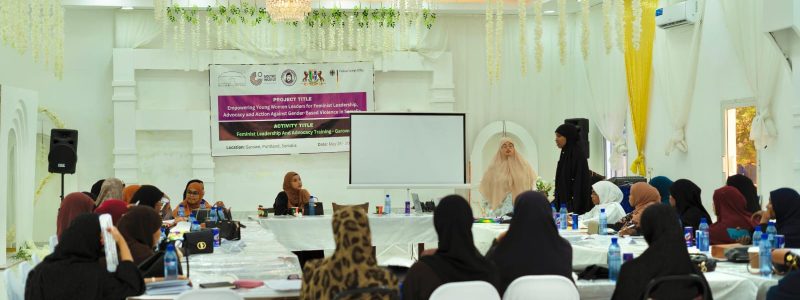
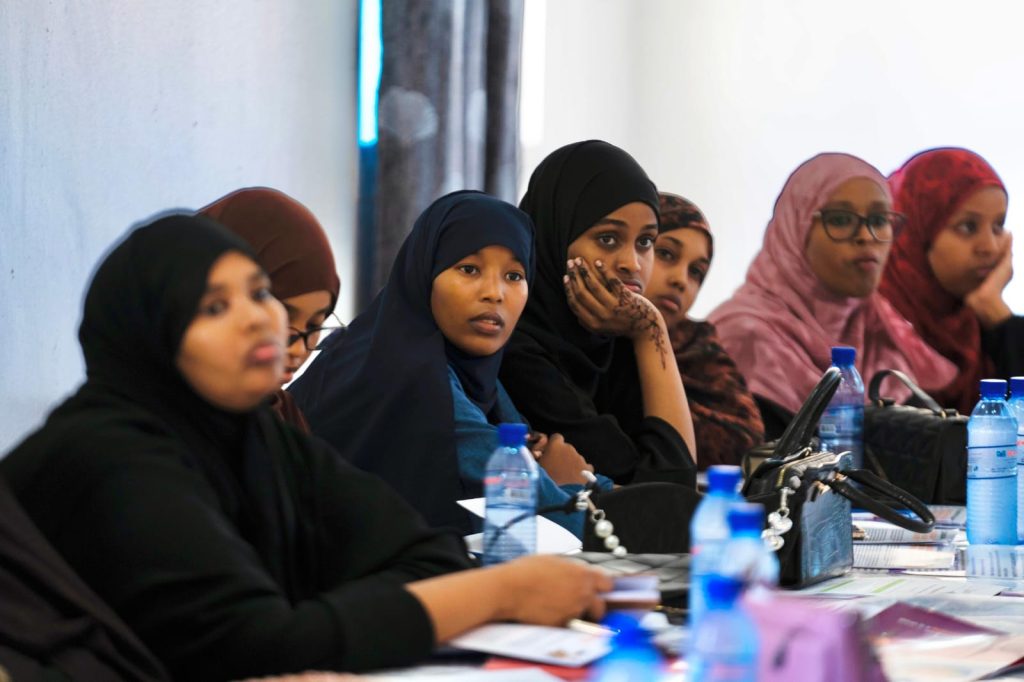
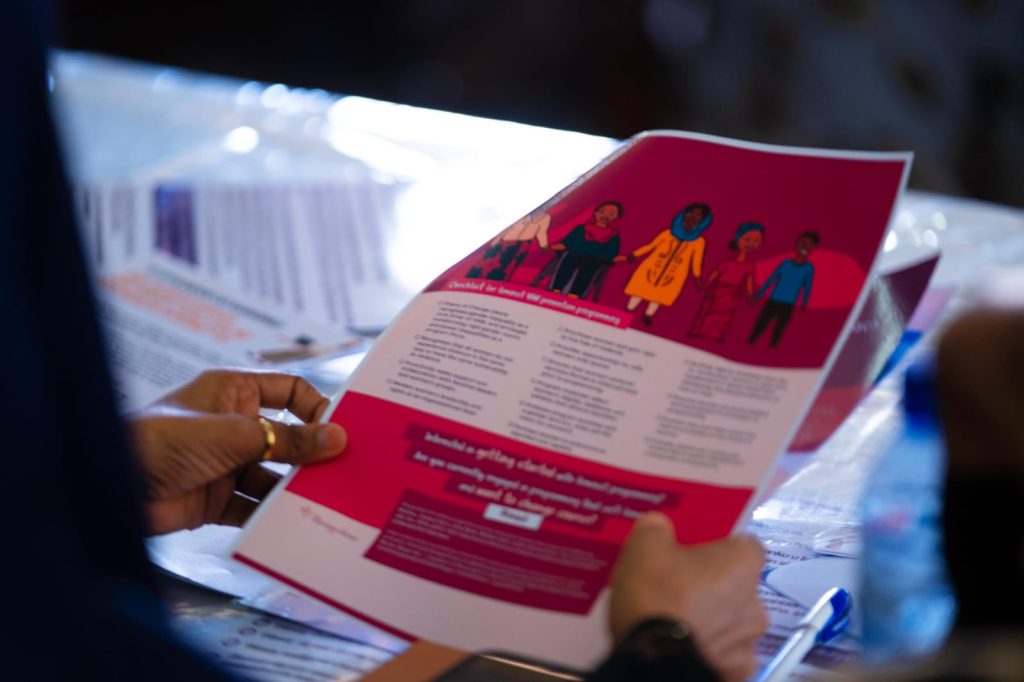
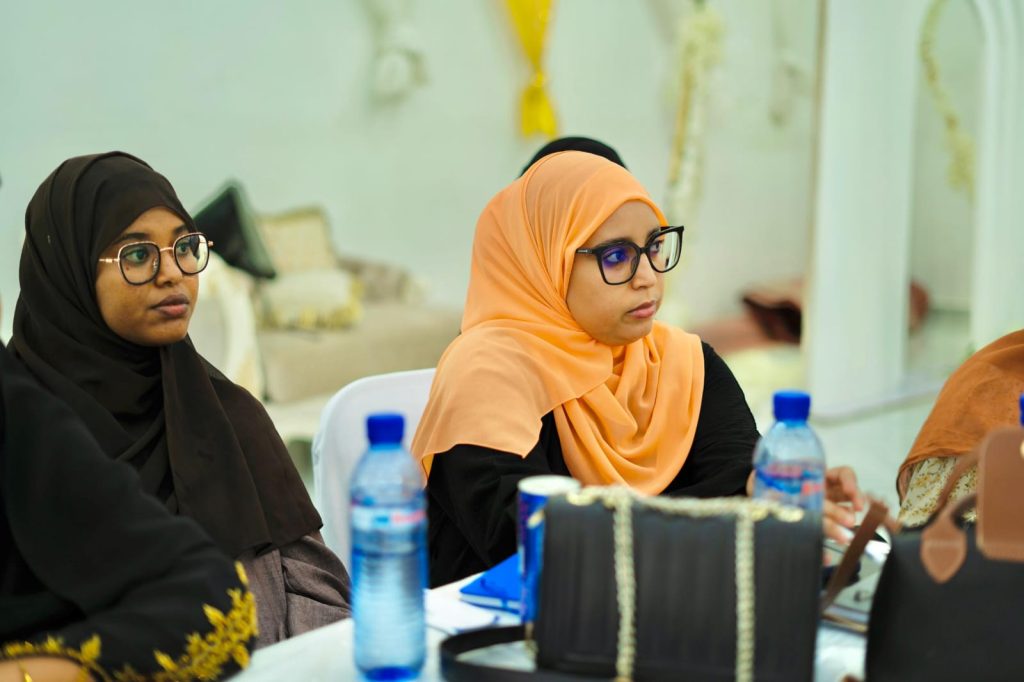
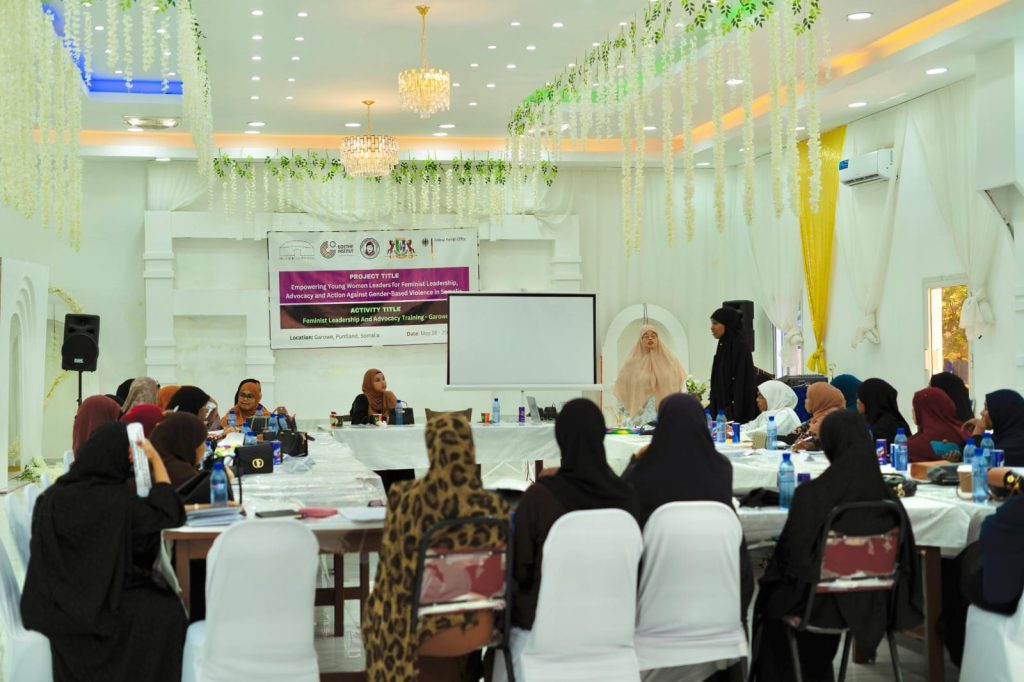
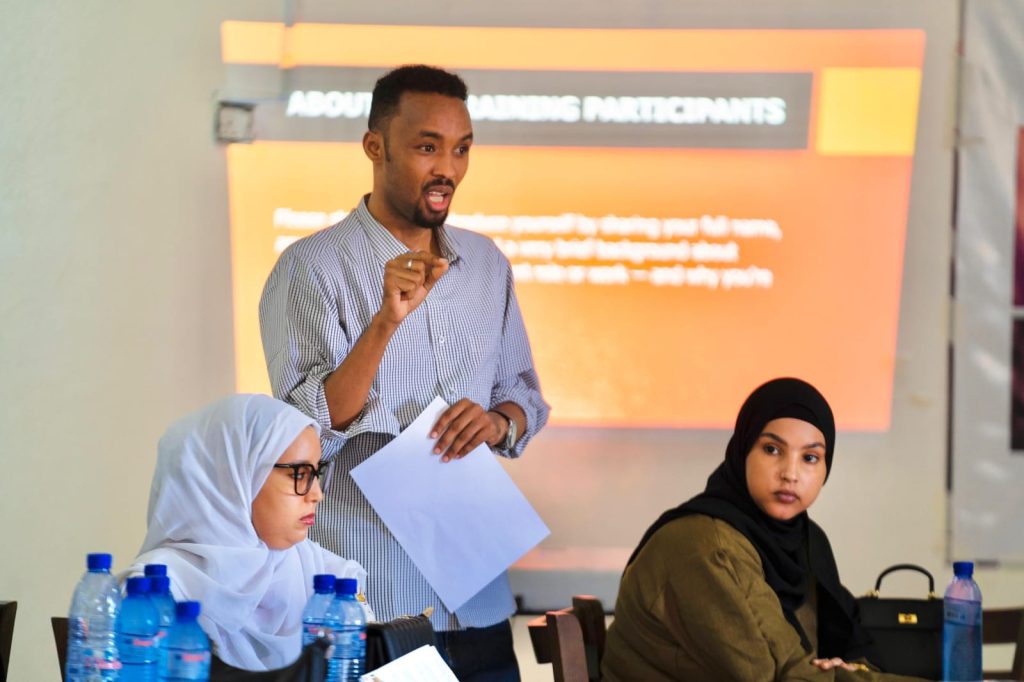
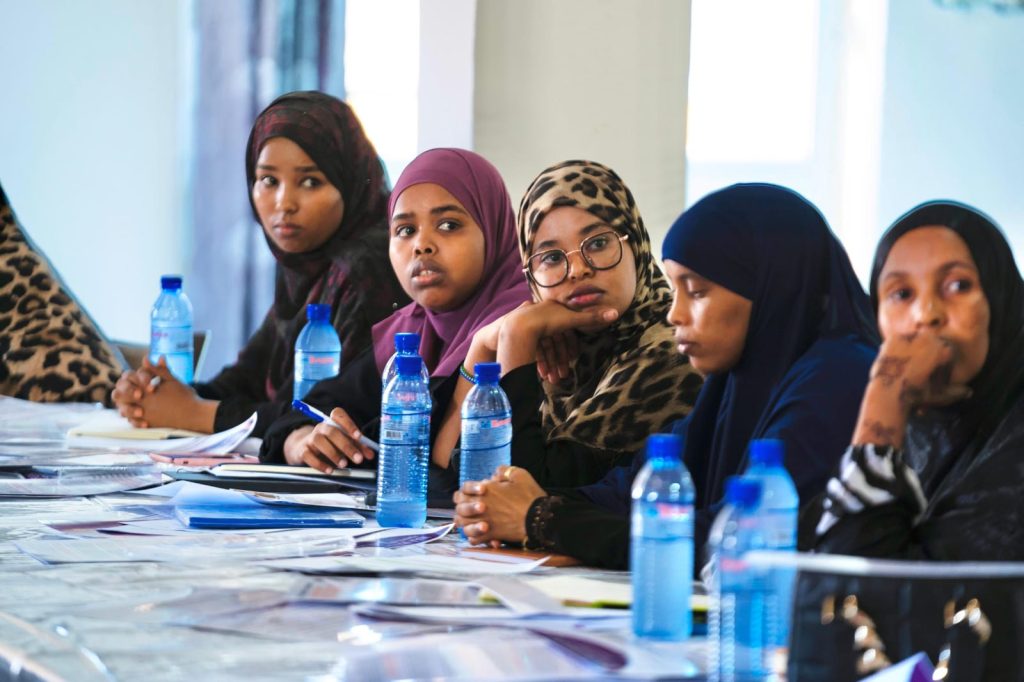
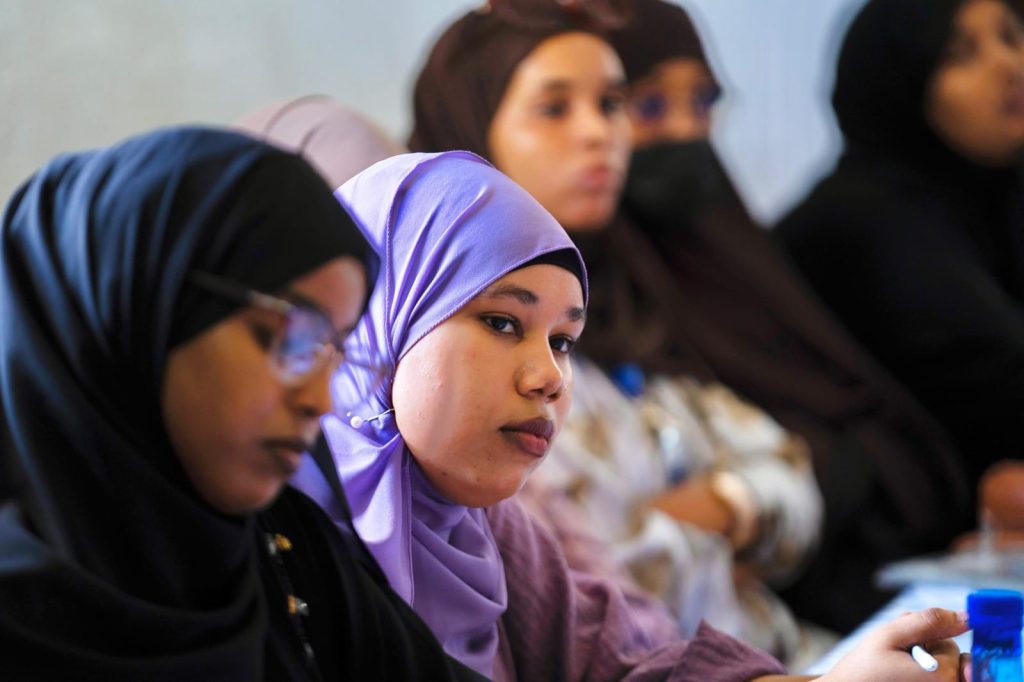
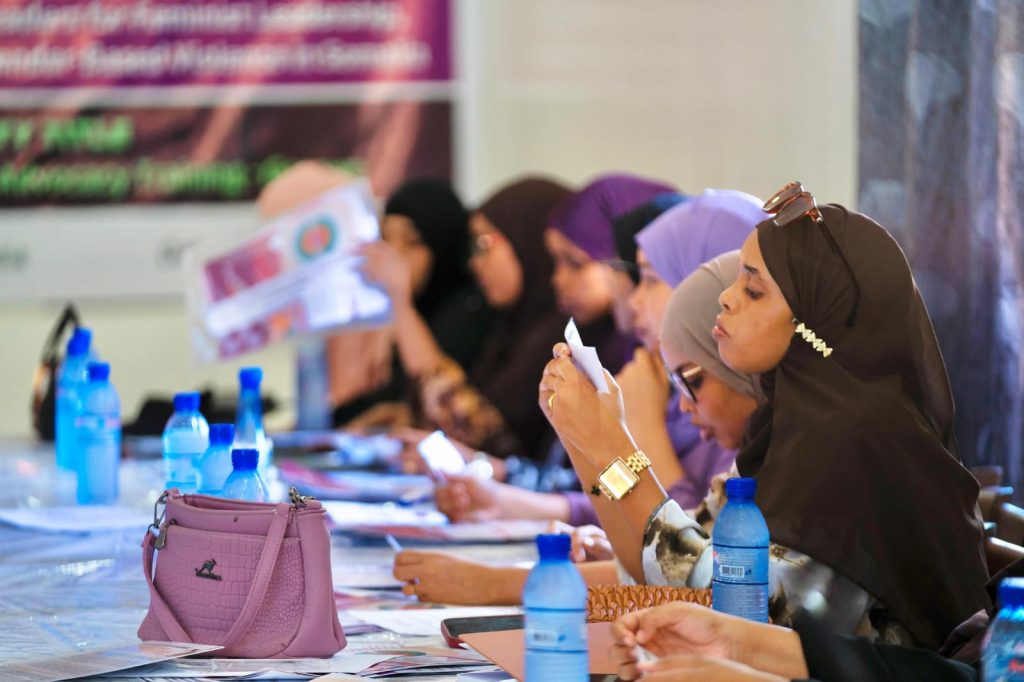
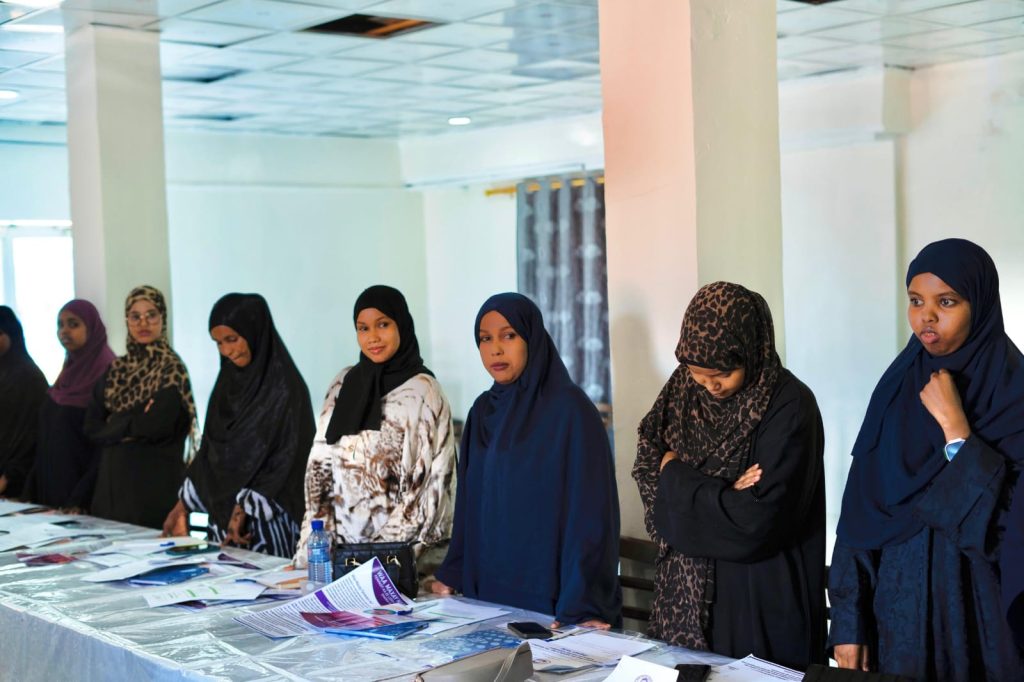
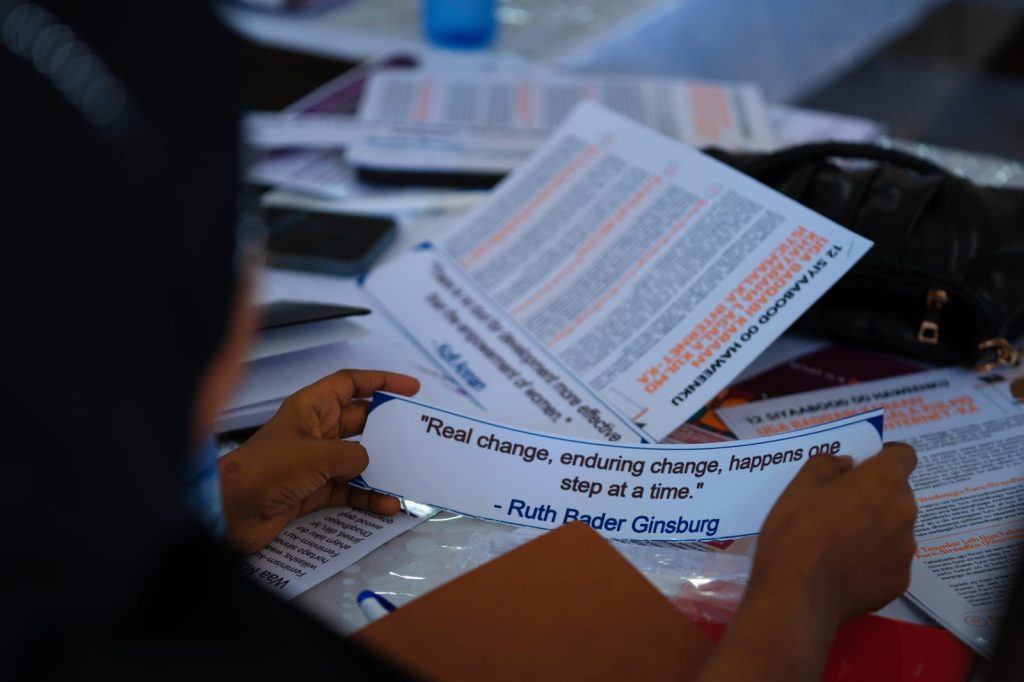
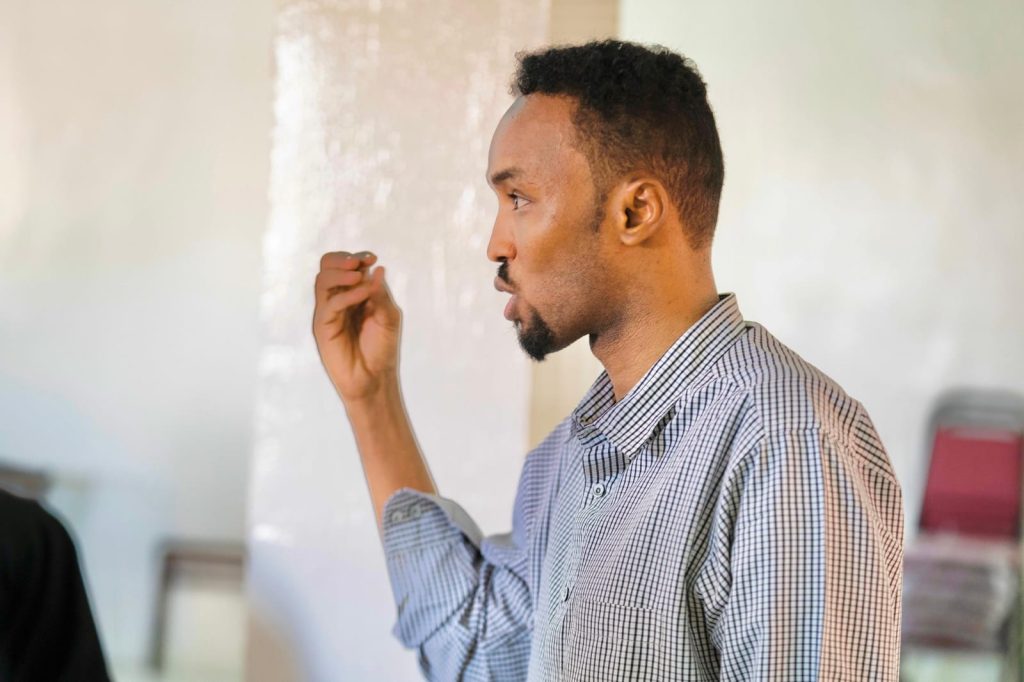
On May 19, 2025, a powerful step toward safer digital spaces for young women in Somalia took place in Garowe. At the request of Hawa Feminist Coalition, a dynamic, youth-led feminist movement, Bareedo Platform delivered an intensive digital security training for 35 young feminist activists.
This initiative aimed to strengthen the capacity of emerging women leaders to navigate online risks, protect their digital identities, and continue their advocacy safely in an increasingly connected world.
Building Safer Digital Spaces for Women Activists
Women activists often face disproportionate risks online—ranging from harassment to targeted cyberattacks. Recognizing this reality, the training was carefully designed to address gender-specific digital vulnerabilities while equipping participants with practical, actionable skills. The training covered seven essential modules, each tailored to empower participants with knowledge and tools for digital resilience.
Understanding Digital Risks and Online Threats: This session highlighted both the common and gender-specific risks women face online, emphasizing how gender-based vulnerabilities make women more frequent targets in digital spaces.
Protecting and Securing Mobile Phones: Given the central role of mobile phones in daily communication and activism, this module focused on practical phone security.Participants learned how to create strong, secure passwords, adjust privacy and security settings, back up important data, use account recovery optionsand enable “Find My Phone” features. A live demonstration introduced essential tools such as antivirus software, permission management, Secure Folder, and Google Play Protect. Special emphasis was placed on avoiding harmful apps and carefully reviewing app permissions.
Securing Messaging Apps and Email: Messaging platforms and email accounts are often entry points for cyber threats. This session provided hands-on guidance for securing commonly used tools. Participants practiced enabling two-factor authentication, strengthening passwords, configuring recovery options and identifying phishing messages and suspicious links. They also learned how to block and report abusive users, as well as how to respond safely to scam attempts.
Securing Social Media Platforms: Social media plays a crucial role in activism, but it also exposes users to risks. This module focused on protecting accounts across platforms like Facebook, Instagram, Snapchat, and TikTok.Key topics included login alerts and notification settings, password security and authenticator apps, managing personal data visibility (age, location, contact details), controlling who can view posts, tags, and profiles. Participants were also trained to report and block harassment and impersonation, prevent misuse of personal content, including risks like non-consensual sharing as well as manage digital footprints by deleting location history and disconnecting third-party apps. A practical demonstration showed how to recover compromised accounts and regain control after security breaches.
Strengthening Feminist Leadership Through Digital Safety
This training was more than a technical workshop—it was an investment in the safety, confidence, and leadership of young feminist activists in Somalia. By equipping participants with essential digital security skills, Bareedo Platform and Hawa Feminist Coalition are helping to create a generation of women who can advocate boldly and safely, both online and offline.
As digital spaces continue to shape activism and social change, initiatives like this are critical in ensuring that women are not only present—but protected, empowered, and leading.
Bareedo Platform Somalia, with the support of the Digital Defenders Partnership (DDP), conducted a two-day training in Garowe, Puntland, Somalia, from June 27 to 29, 2024, for over 42 civil society organizations from various regions of Somalia. In this training, Bareedo Platform trained them on how they can use Microsoft technology, software, and products provided for nonprofit organizations after they have received approval from Microsoft to use these products free of charge. They received training on utilizing Microsoft-provided security tools, which aid in preventing cyber-attacks, detecting and resolving threats, and responding to data breaches.
Bareedo Platform previously identified and recognized 91 civil society organizations, predominantly led by women human rights defenders, feminists, and minorities, as the most vulnerable to digital attacks and threats in Somalia. These groups have consistently faced severe digital attacks such as phishing, spyware, communication theft, surveillance, privacy breaches, censorship, and online harassment, which have significantly impacted their work. Their vulnerabilities mainly resulted from their lack of digital security knowledge and their use of insecure digital equipment and communication platforms, which made them more vulnerable to digital attacks.
Before this training, Bareedo Platform had been providing individual technical assistance for these civil society organizations for months to develop sustainable internal digital security policies and action plans to better respond to cybersecurity challenges and digital threats. The support included how these organizations could have access to Microsoft’s grants, donations, and discounted products and services specifically designed for nonprofit organizations, although these organizations could not afford to buy the expensive secure software and products.
With the technical assistance of Bareedo Platform, 40 out of 51 organizations that applied for Microsoft Nonprofit Solutions received approval from Microsoft to use their secure software and products free of charge or at a discounted price. Bareedo Platform conducted a two-day training for these organizations to teach them how to use the services provided by the Microsoft nonprofit to help them effectively protect themselves from digital threats.
With the use of Microsoft’s secure products and software, these civil society organizations, which have previously faced digital threats and attacks, can now keep their data safe from cyberattacks and help manage their network security.
As part of this project that is funded by Digital Defenders Partnership (DDP), Bareedo Platform previously conducted three-days long digital security awareness and training for 108 civil society organizations, human rights defenders, activists, and journalists in Somalia who have been facing digital attacks and risks. The training which was held from March 2, 2024 to March 4, 2024 in Garowe, Somalia and facilitated by a professional digital security expert, the participants learned the following digital knowledge and practices to respond to the digital security challenges they face in their work and daily lives.
Bareedo Platform also reached out to and provided direct digital security support for 49 NGO staff, human rights defenders, activists, and journalists across Somalia and also helped 21 civil society organizations, particularly those led by vulnerable groups such as women, feminists, minorities, and LGBTQ people, solve some immediate security threats and risks they have been facing digital threats throughout Somalia, as well as develop sustainable internal digital security policies and action plans to better respond to cybersecurity challenges and digital threats.
Bareedo Platform also developed the first draft of a digital risk assessment tool that will be available online for more than 10,000 civil society organizations, human rights defenders, activists, and journalists in Somalia to identify their online security strengths and weaknesses and get relevant recommendations and resources for improvement.
Bareedo Platform appreciates Puntland NGO Network (PUNTNGO), an umbrella body that brings together all registered local non-governmental and non-profit organizations (NGO) operating in Puntland, Somalia, for facilitation of the training, as well as their close collaboration on referral and bringing the most at-risk groups facing digital attacks to our attention.
Somalia has one of the world’s largest young populations, with 75 percent of its population under 30 years old. While young people represent the majority in Somali society, continuing unrest, conflict, and socioeconomic and political exclusion have left them with psychological wounds and multiple roadblocks to adulthood.
This leadership training challenge is part of the MENA (Middle East and North Africa) Fellowship Program, a flagship project supported by NELIS—Next Leaders’ Initiative for Sustainability. The Fellowship Program aimed to equip one million NexGen leaders and social innovators with the required skills to lead positive and sustainable change in their regions by 2030.
Many young people in Somalia lack the critical thinking and leadership skills necessary to develop into better adults because ongoing unrest and conflict have demoralized them, leaving them with psychological wounds and numerous obstacles to adulthood.
Engaging and empowering young people is a prerequisite for the UN to deliver on its mandate in support of the Somali people. As a result, a number of global and national frameworks shape the UN’s integrated response in support of Somali youth. Youth leadership development is crucial for fostering future leaders and empowering young individuals to make a positive impact in their communities. This proposed training initiative aims to develop effective youth leadership programs by exploring strategies and best practices that can enhance youth’s leadership skills and abilities to inspire positive change in their communities.
Why join the Youth Leadership Program?
Participating in the Youth Leadership Program will equip you with leadership and critical thinking skills, enhancing your ability to influence and contribute to socio-economic development within your local community as a productive and inspired citizen. This leadership program aims to boost your potential to contribute and open up broad network opportunities, while also building your capacity to contribute and implement sustainable community programs in communities.
During the program, you will undergo 3 weeks of extensive training to prepare you for your role as a program facilitator, coach, and change maker. After training, you will have the opportunity to participate in community support initiatives.
Are you a passionate and driven young leader looking to make a difference in your community? Are youbetween the ages of 18 and 30, living in Somalia, who is highly motivated to cause change in their lives and the lives of their communities?
Join the leadership program in collaboration with the OML-MENA Fellowship Program, NELIS: The Next Leaders’ Initiative for Sustainability. The MENA Fellows Leadership Challenge is proud to announce that applications are now open for the Youth Leadership Program in August–Sep 2024. This transformative initiative aims to equip young people with the skills, knowledge, and creativity needed to drive social change and foster entrepreneurship leadership in their communities.
Eligibility
Age 18–35
Have an interest in personal development and leadership.
Traits of a problem solver
Having a personal vision
Passion to make a positive change in the community, particularly pastoralist communities
Have access to a basic smartphone or laptop and possess basic computer skills.
Demonstrated leadership and passion for community development and entrepreneurship.
How to Apply
Click this online link https://forms.gle/ybKjb83YWT8b1hRY6 and fill it with all required information regarding your interest in the participation of the program.
With the support of the Digital Defenders Partnership (DDP), Bareedo Platform Somalia held a three-day digital security training for more than 70 civil society organizations, human rights defenders, activists and journalists from all regions of the state of Puntland in Somalia to promote their digital security capacity to better respond to cybersecurity challenges and digital threats.
The training included and gave priority to the organizations run by the most vulnerable groups, such as women journalists, women human rights defenders, women activists, feminists, minorities, and people with disabilities who are subject to digital attacks or at risk of digital threats. 93% of the training participants have never had or participated in digital security training. 79% of them have been facing cybersecurity challenges and digital threats. The Puntland NGO Network (PUNTNGO), an umbrella organization that brings together all registered local non-governmental and non-profit organizations (NGO) operating in Puntland, Somalia, facilitated the identification, selection, and reach of these organizations and human rights defenders.
The training was held between March 2, 2024, and March 4, 2024, and was held in Garowe at the conference hall of Puntland State University, which is an ample and perfect venue for accommodating a large number of participants in observance of the COVID-19 health and safety measures.
Professional digital security experts with extensive knowledge and experience in cybersecurity facilitated and led the training. They taught the training participants topics covering knowledge and practical experience on how to deal with different digital risks, including phishing, ransomware, malware, password protection, information security, social engineering, physical security, mobile device security, email security, working remotely, cloud security, social media, safe web browsing, risk management, and incident reporting. Updates about the newly-emerged threats and vulnerabilities that civil society organizations and human rights defenders need to be aware of and watchful of. The training also included sessions covering how these organizations develop sustainable internal digital security policies and action plans to better respond to cybersecurity challenges and digital threats.
The training was participatory and highly practical, where the participants engaged in discussions, brainstorming, and experience-sharing sessions where they talked about the risks and problems they face online, such as cyber-harassment, trolling, doxing, non-consensual image distribution, and others, as well as the solutions and how to respond to them and ensure their digital safety in the long run.
Bareedo Platform ensured the relevance and appropriateness of training lessons and knowledge that fit the needs of the participants based on previous incidents, vulnerabilities, and risks they face online. The training materials were developed in line with the needs of the target population and the findings of a digital security assessment survey that was conducted before the training.
95% of the training participants reported that the training was helpful for them and that the training contents were relevant and most appropriate to their digital security needs in a post-training survey conducted after the training.
As a result, the training adequately improved the capacity and resilience of these 70 civil society organizations and human rights defenders, who have been facing severe cybersecurity challenges and digital threats. In consideration of pre-training and post-training surveys, the participants improved their digital security capacity and resilience and tapped practical knowledge and capacity to respond to the digital security challenges they face in their work and daily lives. The training participants rated their digital security knowledge as 7.3% “excellent,”, 52.5% “good,”, and 8.5% “adequate” in a post-training survey conducted after the training.
The training participants also learned and practiced how they can develop their own digital safety policies and plans customized to their needs and goals and adopt basic safety practices, such as incorporating digital security training into their onboarding process for new staff and encouraging interest in digital safety practices among all staff.
88.1% of the training participants said that the training met their expectations in a post-training survey conducted after the training. As part of the participants’ action plans after the training, 55% of them said they will train and share what they have learned with their organization’s staff members; 29% said they will help their organizations conduct digital risk assessments to identify online security strengths and weaknesses as well as develop applicable recommendations and resources for improvement. 15.3% said they will help their organizations develop long-term internal digital security policies and action plans to better address cybersecurity concerns and digital threats.
This much-needed training is part of the activities of a project entitled “Strengthening the digital security capacity of civil society organizations, human rights defenders, activists, and journalists in Somalia” implemented by Bareedo Platform in Somalia in response to the growing digital security threats and attacks faced by civil society organizations, journalists, human rights defenders, and activists in Somalia.
The project was proposed after seeing that civil society organizations, human rights defenders, activists, and journalists have become more dependent on the internet and digital platforms than before for communications, organization, and the amplification of their critical work as Internet connectivity gains momentum in Somalia. Civil society organizations, human rights defenders, activists, and journalists face a multitude of challenges and vulnerabilities in the online world, ranging from trolling, doxing, hacking, targeted surveillance, online harassment, smear campaigns, and disinformation, including gendered disinformation. These have chilling consequences, with most reporting the loss of their social media platforms, emails, and sensitive data. Some opt to self-censor, limit, or leave online spaces, and activism works.
These challenges continued to exist because these groups lacked the knowledge and capacity to defend against online threats, minimize their risks, and stay safe online, expressing feelings of helplessness when faced with things like surveillance and online harassment. Others have low awareness of actual threats and attacks, creating an “it won’t happen to me” attitude. Data shows that 72% of them have never participated in any digital security training that taught them how to use the internet or digital devices securely and how to protect their digital devices and platforms. Another challenge is that 79% of civil society organizations often do not have sufficient cybersecurity plans in place due to a lack of the necessary resources and expertise and the budget to hire outside security experts, leaving them vulnerable to breaches.
Bareedo Platform will continue to support and build the digital security capacity of civil society organizations, particularly those led by vulnerable groups such as women, feminists, minorities, and disabled people who are facing digital threats and risks throughout Somalia. Bareedo Platform will consider and prioritize the unique digital attacks and threats that these groups face on digital platforms and will develop the relevant digital tools and practices that they can adapt to ensure their digital safety in the long run.
In follow-up to the training, Bareedo Platform will use its digital security expert to offer virtual-based, one-on-one direct technical support for civil society organizations, including digital safety diagnostics, technical assistance, policy, and support for those organizations that lack the necessary resources and expertise and the budget to hire an expert to enhance organization-level digital security practices.
As part of its digital rights program, Bareedo Platform established a Digital Help Desk in Somalia to provide timely technical assistance, resources, and capacity building to civil society organizations, human rights defenders, journalists, and activists in Somalia who are under attack or at risk of a digital threat. And also, the desk works to combat online harassment and abuse, eliminate arbitrary and unlawful surveillance, combat government-imposed Internet shutdowns, and counter disinformation and foreign information manipulation and interference.
Bareedo Platform conducted a one-day workshop on Building Inclusive Democracy for Displaced People in Somalia on Monday, March 4. A total of 48 participants from different regions of State of Puntland in Somalia, including some from Las’anod City (Khaatumo Administration), representing local nonprofit organizations, and some from government institutions, participated in the workshop.
Mr. Sharmarke Yusuf and Mr. Abdikhayr Hussein, two senior members of Bareedo Platform Somalia, facilitated the workshop.
“This is a platform developed by People Powered, the Global Hub for Participatory Democracy, and a consortium of local and national organizations, which the Bareedo Platform includes. There are about six courses on the platform, and all are available. But we are going to focus on and study the course Building Inclusive Democracy for Displaced People.” Said Mr. Sharmake Yusuf
The participants introduced the online platform which they only needed to sign up by clicking the green button, put their basic information in the box, and start the learning journey.
The participants were introduced to and engaged in online self-paced training courses collected on a knowledge platform developed by People Powered and a consortium of local and national organizations where all relevant stakeholders and individuals can learn more about how to make participatory and deliberative processes more inclusive. The participants engaged in one of the six courses on the online learning platform, which is “Building Inclusive Democracy for Displaced People.”
The Bareedo team provided the participants with guidance as they signed up and registered at Building Inclusive Democracy Online Training, following a brief informative introduction session about the online learning platform courses and how to access the platform. Through a well-designed online Displaced Course, the participants learned about displaced people worldwide, defining the specific terminologies for the familiarity of the course. The participants learned the term “displaced,” which stands for different groups of people.
Throughout the introduction of the course, there were particular examples of Somalia’s displacement of people, related policies, and national strategies, as well as participants engagement in participatory discussions regarding the strategies to include in participatory and deliberative processes.
The participants were asked to present their understanding and experience of the term displaced. Mr. Abdikhayr Hussein, who has strong experience in displacement and has worked in the sector, briefly shared the different groups that fall under the term displaced.
“There are about three displaced groups: IDP, refugees, and immigrants. The first group is the internally displaced people, who are people forced to leave their homes but who remain within their country’s borders. The second group of refugees are people who have lost the protection of their country of origin and who cannot or are unwilling to return there due to a well-founded fear of persecution. The third group are immigrants, who are people living in a country other than that of their birth.” Said Abdikhayr Hussein
As part of the course contents, they also discussed the challenges and promising solutions, including the case studies regarding the inclusion of displaced people in decision-making and the possible outcomes of the total inclusion of displaced people. The participants discussed the deliberative process of total inclusion of displaced people in decision-making and the barriers and roadblocks that limit the participation of displaced people in the decision-making process and social services.
Furthermore, the participants reflected on the possible solutions that exist in the country. Comparing those possible solutions presented by the course, the participants highlighted that there is a need for local reintegration through providing proper shelter and resettlement, as the displaced communities in Somalia are continuously affected by droughts, flooding, and also recent conflicts in the Sool region. They shared and received an informative process for implementing successful interventions when addressing building inclusive democracy for displaced people.
Participants were most interested in key strategies to promote the inclusion of displaced people, challenges and solutions in democratic strategies, and ensuring active participation, where the participants have had time to practice and discuss the implementation of an impactful inclusive democracy for displaced people and explore practical insights that empower them to undertake a lasting impact.
The participants discussed the most common challenges that face displaced people in Somalia and highlighted some points, including the fact that displaced people in Puntland have a shortage of food, healthy access, education, and shelter. The participants emphasized that the most vulnerable displaced people are living in congested and informal settlements on the outskirts of the cities.
There have been some important comments regarding the platform and the course raised by the participants, which Bareedo Platform will share with People Powered.
After completing the online course, the participants were able to download the completion certificate for the courses, indicating their completion of the displaced course on the platform.